Chicago is a city of neighborhoods in a way that few American cities can claim. The identity of Pilsen is not the identity of Logan Square. Jefferson Park is not Wicker Park. Each of these communities has its own character, its own social fabric, and its own set of institutions that give it shape and continuity across years and decades. Among those institutions, the neighborhood restaurant and café occupies a particular kind of importance. It is one of the few commercial spaces where people of different backgrounds, ages, and routines converge regularly around something genuinely shared. For anyone looking for a family friendly restaurant in Chicago that functions as more than a place to eat, or a coffee shop that feels woven into the life of its street rather than dropped onto it, the distinction between a community-centered café and a well-branded food service operation is immediately legible.
5800 North Café on Milwaukee Avenue in Jefferson Park is the former. Understanding why that matters, for the people who eat there and for the neighborhood that surrounds it, is worth examining carefully.
The Economic Case for Independent Cafés
The economic argument for supporting independent neighborhood restaurants is well documented and consistently underappreciated by the people it most directly benefits.
Currently, 70 percent of restaurants in the United States are single-unit operations, and the hospitality industry remains a major economic driver — with new restaurant openings creating workforce opportunities and generating economic activity that larger chain operations do not replicate at the neighborhood level.
Independent restaurant owners are often the first to show up when their communities are in crisis — preparing meals for frontline workers, opening their doors to neighbors in need, donating goods, and raising funds for local schools after disasters, all while shouldering significant operational pressures.
The economic life of a neighborhood café is inseparable from the economic life of the neighborhood itself. When a family-owned restaurant on Milwaukee Avenue succeeds, it employs people from the surrounding community, sources goods from local suppliers, and keeps revenue circulating within a few miles of where it was earned. When it closes, the loss is not just a vacant storefront. It is the removal of an institution that had accumulated years of trust, routine, and relationship — things that cannot be reconstructed quickly or cheaply.
What Family Ownership Actually Means for a Community
The distinction between a family-owned restaurant and a corporate-operated one is not simply a matter of scale. It is a matter of accountability and identity.
Chicago Legacy Businesses — often multi-generational, family-owned, and locally operated — are a reflection of Chicago’s cultural richness and ethnic diversity. Business owners in this category often live in their community and employ people from their community, and their authenticity and uniqueness contribute to the quality of life for Chicagoans in ways that chain operations cannot replicate.
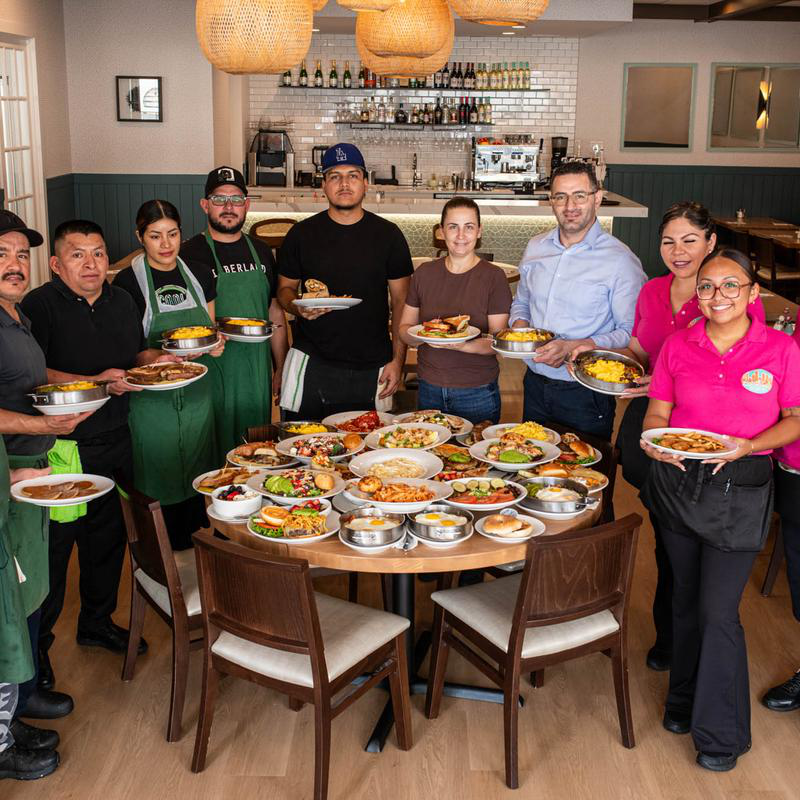
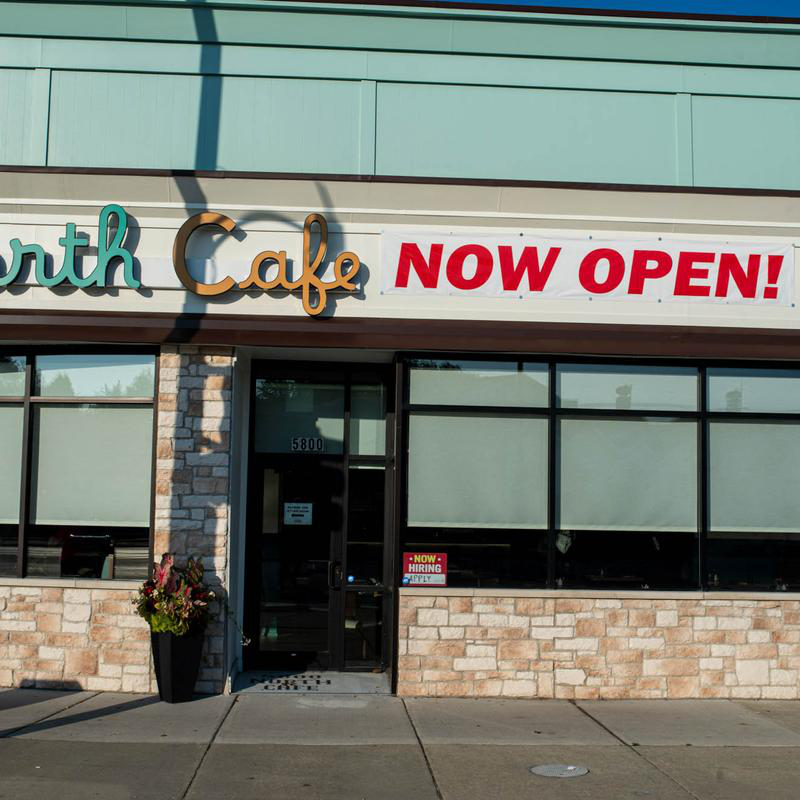
5800 North Cafe was built from the ground up by husband and wife team Al and Eva, who describe the restaurant as both a business and a home — for their family and for the community that has gathered around it over more than twelve years. That origin story is not marketing language. It is the reason the room feels the way it does on a Saturday morning, and it is the reason the regulars at the corner table have been coming back every week for years. The ownership is present, invested, and personally accountable to the people walking through the door in a way that a regional manager overseeing a franchise location simply cannot be.
The Social Infrastructure of a Neighborhood Café
Beyond economics and ownership, community-centered cafés perform a social function that is harder to quantify but equally important.
Having a local coffee shop increases the walkability and community of a neighborhood, creating value beyond commercial transactions. Neighborhood cafés succeed by becoming integral parts of their communities rather than merely providing a service — a process that involves understanding local demographics, supporting community initiatives, and creating spaces where neighbors naturally gather.
This social infrastructure dimension is what separates a café that has genuinely become part of a neighborhood from one that is merely located in it. The former is a place where people run into each other, catch up, make introductions, and maintain the low-level social connectivity that makes a neighborhood feel like a community rather than a collection of adjacent households. The latter provides coffee and eggs and nothing else.
QSR Magazine captured this distinction precisely: independent food businesses have something that chains cannot buy — they actually are local, they actually are part of the community, and every consistent appearance in neighborhood life is a deposit into an account of trust and recognition that pays dividends in loyalty no points program can replicate.
Private Events as Community Infrastructure
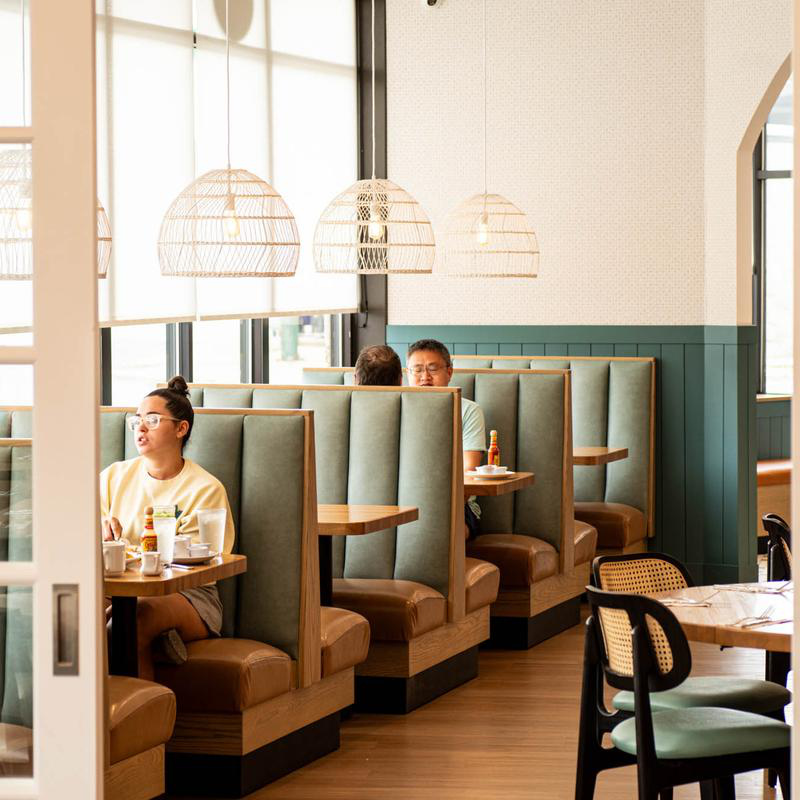
One of the less visible but genuinely important ways that community-centered cafés strengthen neighborhoods is by providing the physical space for the gatherings that mark community life.
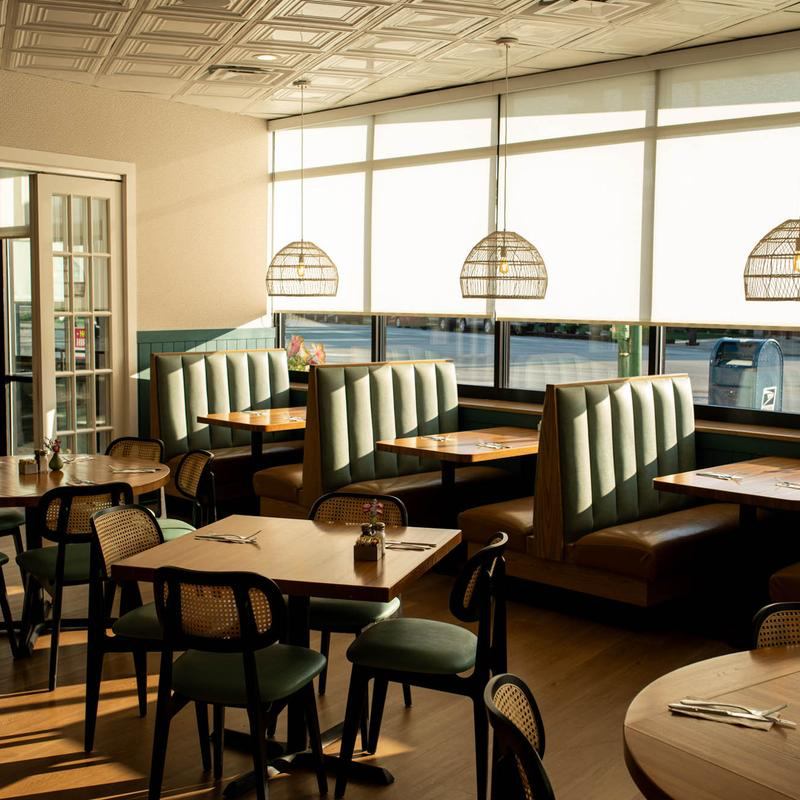
Birthday parties, family reunions, retirement celebrations, graduation dinners, and neighborhood gatherings all require a venue that combines good food with the flexibility and warmth of a space that does not feel institutional. Hotels and event venues deliver one kind of experience. A family-owned neighborhood café with a party room that seats up to 100 guests delivers something entirely different: a familiar space, run by people the community knows, serving food made from scratch in a kitchen whose standards the guests have already experienced firsthand.
This is not a minor function. Chicago’s own civic tourism organization has documented the importance of community-rooted businesses in defining the character of individual neighborhoods, noting that purpose-driven local enterprises uplift communities in ways that extend well beyond their commercial operations. For Jefferson Park and the broader Northwest Side, 5800 North Cafe’s private event capability positions it as exactly this kind of anchor institution.
Why the Northwest Side Needs Places Like This
Chicago’s Northwest Side neighborhoods have a strong tradition of family-owned, community-rooted businesses that reflect the immigrant and working-class histories of the communities they serve. Milwaukee Avenue, in particular, has been a commercial and cultural corridor for successive waves of Chicago residents who have built their businesses and their lives along its length.
Cafés and restaurants that operate in this tradition do something that no amount of chain restaurant expansion can replicate. They carry the specific character and values of the people who founded them into daily contact with the community, and they create the conditions for the kind of repeated, casual interaction that builds the social trust that holds a neighborhood together over time.
Be Part of the Community at 5800 North Cafe
For a family-friendly restaurant in Chicago that is genuinely part of the neighborhood it serves, visit 5800 North Cafe on Milwaukee Avenue. Whether you are stopping in for a weekday breakfast, searching for a birthday catering service, or simply looking for a coffee shop that feels like it belongs to the street it sits on, explore everything 5800 North Cafe has to offer and come see what community-centered dining actually looks like.